

Webinar
Composable commerce & clean data: why it's more important now than ever
Modern digital commerce is changing faster than ever, and especially in B2B, traditional monolithic platforms are increasingly running into their limits. Companies need flexibility, speed and reliable data to move with new market trends and AI-driven technologies.
Scroll down for positive impact

Modern e-commerce is too complex for monolithic architecture
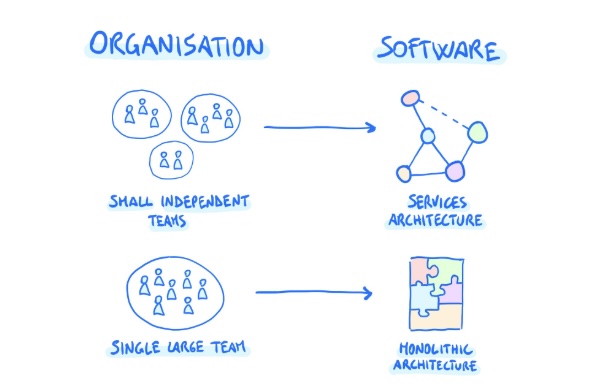
In today's rapidly evolving digital landscape, especially in B2B, commerce has become too complex for rigid monolithic systems. Organizations need speed, scalability and flexibility, but outdated platforms are often a drag. Composable commerce offers an alternative: a modular architecture in which each component can be developed independently. But composability works only if the underlying data is clean, structured and standardized.
Data is the connective tissue that connects ERPs, OMSs, pricing engines, PIMs, CMSs and AI services. With AI developing at lightning speed, the need for a modular, data-centric architecture becomes even greater. Companies need to be able to connect new tools without complete re-platforming or re-establishing the tech stack.
What composable commerce enables for digital teams
The power of composable commerce lies in the flexibility it frees up. Teams can launch new features faster, test new channels or adopt best-of-breed tools without depending on a single vendor. Services can scale individually based on business need. Perhaps the search module needs additional capacity today and pricing tomorrow.
Standardized data contracts allow new modules to be easily integrated, turning the tech stack into a living ecosystem rather than a rigid structure. This modularity becomes even more valuable as AI matures. An open architecture supports AI agents, automation and continuous upgrades without heavy lock-in.
Business impact: faster value and less risk
For the business, the shift to composability translates directly into value. Reusable components and modular patterns shorten development cycles and accelerate time to market. The architecture better connects to real business domains such as customers, products, orders, prices, inventory. This creates systems that actually reflect the organization.
Technical debt falls because teams can replace or improve individual services without touching the entire stack. International organizations can innovate locally while still leveraging shared governance, data standards and compliance frameworks.
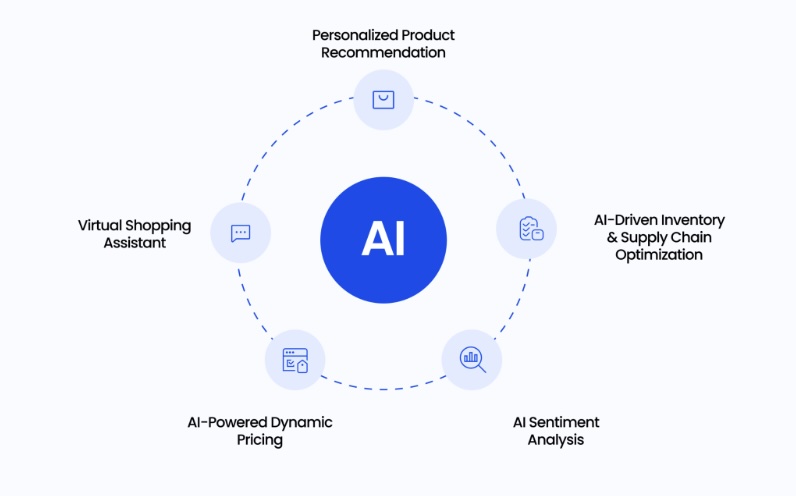
Most importantly, composable commerce prepares organizations for an AI-driven future. Clean data and modular components provide the foundation upon which AI can generate insights, automate processes and deliver adaptive user experiences.
The challenge lies in discipline, governance and change management
Yet this transformation does not come without challenges. Managing multiple modules requires tight governance, clear data ownership and teams with strong integration and orchestration skills. Moving from monolith to modularity requires initial investments, careful planning and thoughtful change management. Migration scenarios, such as the strangler pattern, can introduce uncertainty if not properly coordinated.
And while AI accelerates processes, it relies heavily on data quality, prompt design and context management. These are areas in which many organizations have yet to make strides.
Working toward a future-proof commerce foundation
However, when composable commerce is applied with care and supported by clean, well-structured data, it creates a powerful system for digital transformation.
It replaces rigidity with flexibility, accelerates innovation and helps companies harness the full potential of AI. Not just today, but especially in the future.
Reasons why you want to attend
In just 45 minutes, you'll discover how leading B2B companies are turning product data chaos into a growth engine.
1
Boost your competitive edge
Learn how to manage your product data and use it as a strategic asset.
2
AI for B2B scaling
Discover the hidden power of AI in your PIM system, helping you respond faster to market demand and operational challenges.
3
Guaranteed compliance
Ensure your business is prepared for the future of product data with GS1 standards and QR code integration.
Watch the entire webinar back
Couldn't attend or still interested in the topic. Watch the entire webinar back here.
What will we cover
during this webinar?
01
Why standardization is essential due to increase in product data
02
Scaling up your product data with an AI-powered PIM
03
Practical first steps to get started
04
Why Do You Need All This Data? Everyone is Demanding More!


Let's create positive
impact together!
Our information
Brouwerijstraat 1-A1
7523 XC Enschede
Certifications


