

Blog
The obligation for a Digital Product Passport
As an organization, should you or should you not use a Digital Product Passport? And is a QR code to your product page sufficient, or is there something else you need to do?
Scroll down for positive impact
Date

What is the EU Digital Product Passport (DPP) and how is it being implemented via ESPR?
The Ecodesign for Sustainable Products Regulation (ESPR) is the EU framework for making product rules more sustainable and circular. This ESPR came into force on July 18, 2024.
Within the ESPR, the EU is also introducing the Digital Product Passport (DPP). This is a kind of digital "identity card" for products, components, and materials, containing relevant information on sustainability, circularity, recycling, and compliance. The ESPR explicitly states that this information must be accessible electronically.
The criteria for products, and therefore also exactly what DPP information is required, are being developed for each product group, based on planning, impact assessments, and consultation. In other words, it is important to note that a Digital Product Passport is being introduced gradually for each product group.
Is a DPP mandatory for your product or company?
The short answer is: no, not "for all companies at once."
Currently, there is one product group with an explicit legal "passport" requirement: certain batteries under the Batteries Regulation. This requirement is already laid down in legislation, but will come into effect on February 18, 2027 (i.e., legally established, but not yet operationally mandatory today).
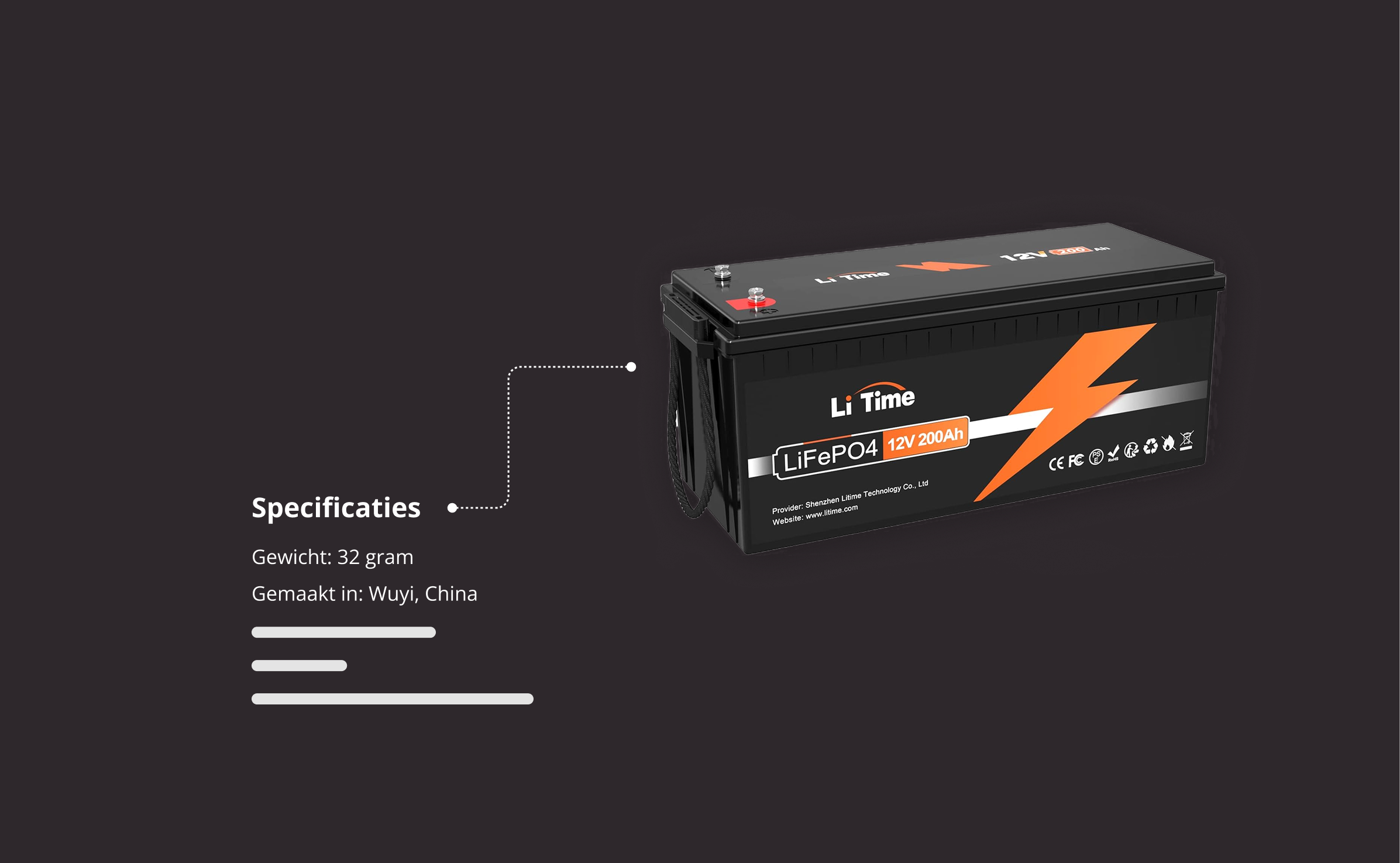
In short, the battery passport applies to:
- LMT batteries (Light Means of Transport, e.g., e-bike/e-scooter)
- Industrial batteries > 2 kWh
- EV batteries (traction batteries for electric vehicles)
In its DPP preparations, the European Commission explicitly refers to batteries as the first product group for which DPPs will be mandatory.

Which product groups will be first, but are not yet mandatory?
Under the ESPR, DPP obligations for other product groups are still being developed. The Commission has published a 2025–2030 work plan setting out the initial priorities for which ecodesign and information requirements, including DPP elements, are being prepared. This is still at the planning and prioritization stage and does not yet constitute a "DPP obligation already in force" for those sectors.
The first ESPR priorities from the 2025–2030 work plan
- Textiles (with a focus on apparel/clothing)
- Furniture
- Tires
- Mattresses
- Iron & steel (semi-finished products)
- Aluminum (semi-finished products)
- And a series of energy-related products that will be further included in the ESPR planning.
So what's the deal with that QR code everyone's talking about?
The terms are often used interchangeably, even though they are fundamentally unrelated. However, they can complement each other:
- A DPP/passport is a regulated dataset with agreements on scope, governance, access, and rights. It is linked to a unique identifier and the data can be accessed in a machine-readable format. The QR code is, at most, the data carrier (access point).
- The QR code is, at most, the data carrier. It is an access point that refers to the passport data. An example of a standardized carrier is the GS1 Digital Link.
A DPP is therefore not a product page.
A standard product detail page does contain product information that may also appear in a DPP. However, such a web page is usually:
- not standardized - the data model is missing
- not role-based - no modified display for consumers, chain partners, or regulators
- not governance-proof—there is no version control, source referencing, or audit trail
- not equipped for controlled access and/or authorization
A DPP system is designed to operate consistently, be machine-readable, and have differentiated access under a clear governance model.

Common misconceptions
In short, there are three major misconceptions that we hear regularly and would like to dispel.
1
An EU DPP is simply a QR code on your product.
No. A DPP is a regulated dataset and information model. The QR/NFC is, at most, the data carrier and therefore a gateway to the passport.
2
Our landing page with product information is the same as a DPP, isn't it?
A DPP requires machine-readable, standardized information and differentiated access (depending on roles and parties).
3
The DPP becomes mandatory for all companies
The ESPR is broad, but its rollout is happening step by step for each product group through follow-up rules and implementation. So, there is no obligation for all companies yet.
The Digital Product Passport is not yet mandatory for every type of organization, but changes are afoot within the European Union. As an organization, it is wise to start assessing whether suppliers and chain partners can provide the correct (and sufficient) product data. Not because "everything will be mandatory tomorrow," but because data maturity in the chain is often the critical factor.
Chain data is demonstrably often insufficient, as research shows that only a small proportion of organizations indicate that they receive sufficient product data from suppliers.
Start simple
Start by identifying what you can obtain from suppliers or partners:
- What product data they provide (and in what format/standard)
- Whether that data is consistent across variants/series/batches
- Who owns which data point (governance)
- How quickly updates move through the chain (version management)
Then your product data will be prepared so that, in the event of any obligations, it will be easier to create a Digital Product Passport.
What will we cover
during this webinar?
01
Why standardization is essential due to increase in product data
02
Scaling up your product data with an AI-powered PIM
03
Practical first steps to get started
04
Why Do You Need All This Data? Everyone is Demanding More!


By Ties Peters
PIM consultant


Let's create positive
impact together!
Our information
Brouwerijstraat 1-A1
7523 XC Enschede
Certifications


