

Blog
Digital Product Passport vs. GS1 Digital Link QR
What is really going on and why a GS1 Digital Link QR code can already be relevant today, even if your organization does not yet need to publish a DPP.
Scroll down for positive impact
Date
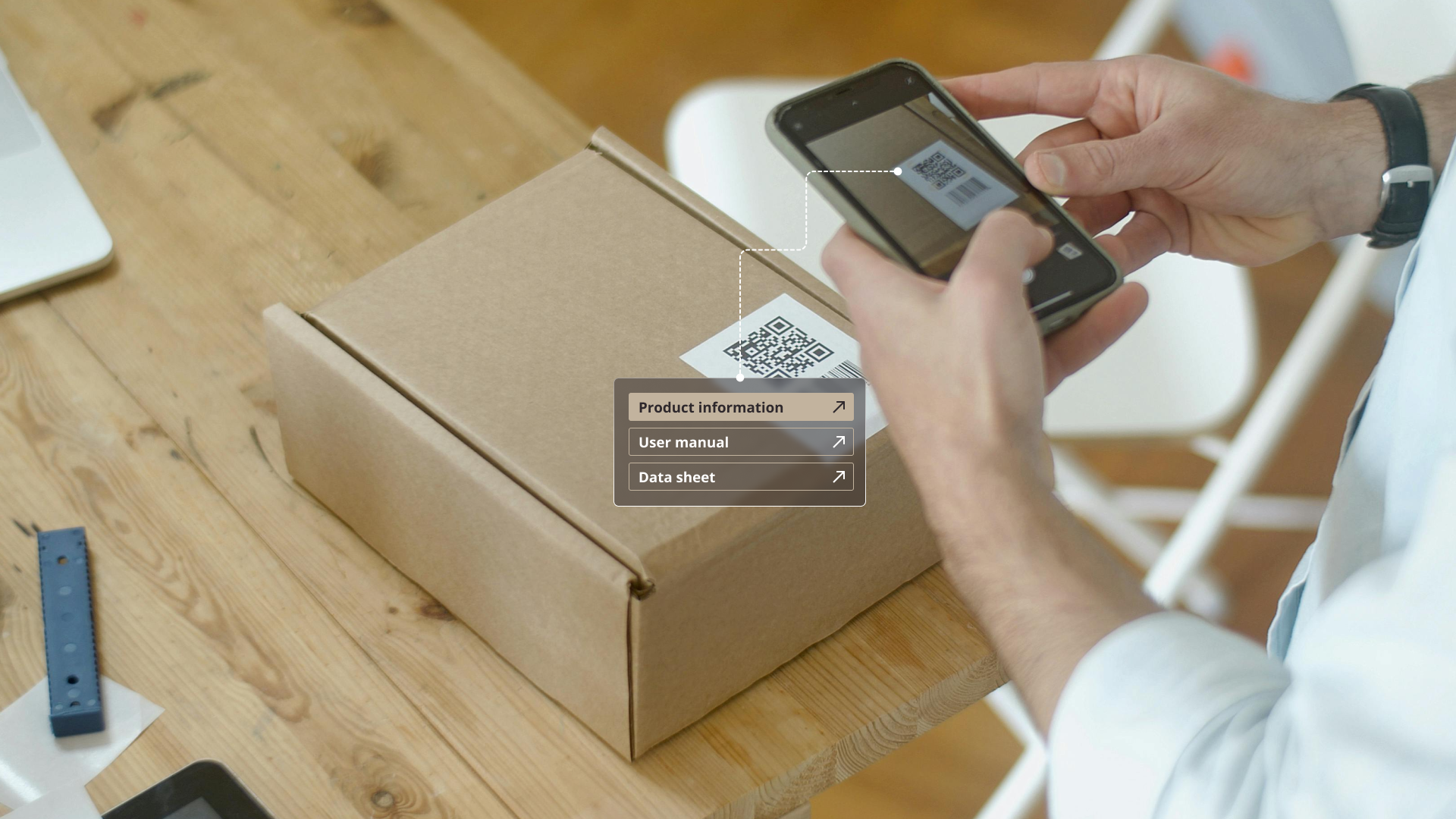
Anyone who has been browsing LinkedIn recently will have seen it: posts suggesting that "every product will soon need a Digital Product Passport (DPP)" and that the solution is simply to "put a QR code on it."
That story sounds logical, but it simplifies reality. In this blog, we explain what the EU Digital Product Passport actually is (and, more importantly, what it is not), what a GS1 Digital Link QR code is, and why that GS1 QR code may already be relevant today, even if your organization does not (yet) need to publish a DPP.
What the EU Digital Product Passport (DPP) is
The Digital Product Passport (DPP) is laid down in the Ecodesign for Sustainable Products Regulation (ESPR). The ESPR has been in force since July 18, 2024, and forms an EU framework for developing ecodesign and information requirements for each product group, including the DPP.
It is important to note that the ESPR is a framework regulation. The specific DPP obligations and regulations ( which data, for whom, and when) are further elaborated for each product group through follow-up regulations. This means that "DPP for all products, right now" is not correct. The obligations arise in phases, depending on your product group.
What are GS1 Digital Link QR codes?
The GS1 Digital Link is a global standard that describes how GS1 identifiers ( such as GTINs) are incorporated into a web address (web URI). In practice, this is often reflected as a QR code on the packaging.
The idea is that a single scan works both in the supply chain and guides consumers and partners to relevant online information. This includes product information, manuals, registration, or recall information.
The main differences between DPP and GS1 Digital Link
DPP and GS1 Digital Link are often mentioned in the same breath because you can access both via a scan. But they are fundamentally different: one is legislation, the other a standard.
Why they are so often confused
They overlap in form, not in meaning. In both cases, you can expect a scannable access point on a product or packaging. However:
- A DPP involves mandatory information + agreements on access and governance.
- GS1 Digital Link is a standardized way of linking product identity to online information.

Why GS1 Digital Link may be relevant now
In addition to regulations, there is also a market shift towards 2D barcodes. Under the name "Sunrise 2027," the retail chain is working towards point-of-sale systems that can read 2D codes in addition to traditional barcodes. This makes a single code for multiple purposes increasingly practical and strengthens the business case for experimenting with GS1 Digital Link QR codes now.
What should you do with it now?
There are a number of steps you can start taking right now. You won't be taking any risks, but your organization will be better prepared for the future.
- Monitor DPP/ESPR: follow developments that are relevant to your product group and assess what this means for your data requirements.
- Organize product data: ensure that source data (PIM/ERP/PLM) is consistent, up-to-date, and reusable.
- Start small with GS1 Digital Link: select 1 to 3 top SKUs and unlock one clear use case (manual, registration, product page, or recall information).

By Ties Peters
PIM consultant


Let's create positive
impact together!
Our information
Brouwerijstraat 1-A1
7523 XC Enschede
Certifications


