

Blog
Declaration of Conformity for PPWR: How to Prepare It
A DoC is easy to draw up, but it’s only worth anything if you can back it up. Find out which PPWR requirements it already meets today and how to get your technical file in order.
Scroll down for positive impact
Date
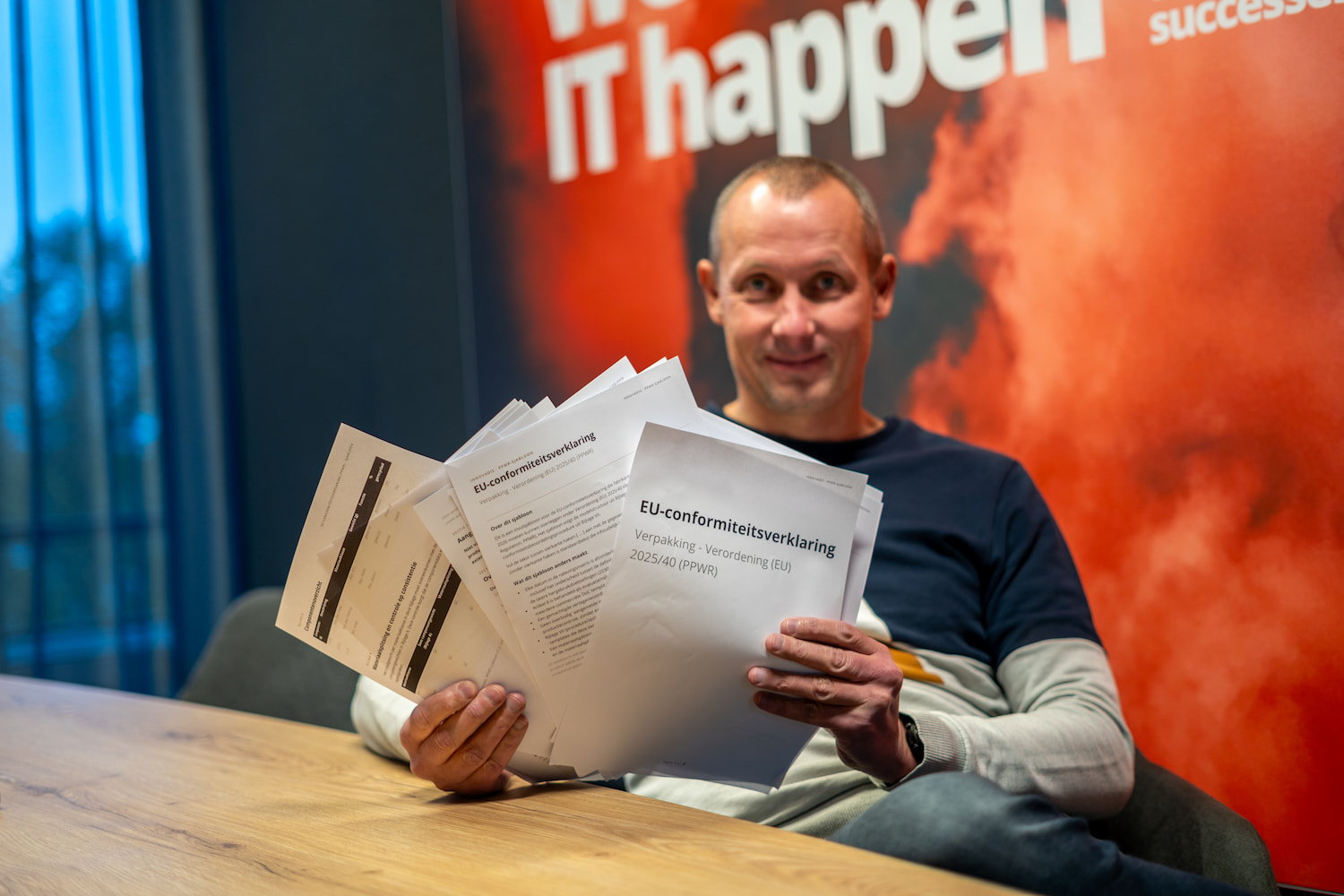
As of August 12, 2026, you must be able to provide a Declaration of Conformity for every type of packaging you place on the market in the EU. On paper, it’s a single document consisting of just a few lines. In practice, however, it relies on data scattered across your ERP, your PIM, Excel spreadsheets, and the procurement team’s inbox. So while a DoC is quick to sign, it’s only valuable if you can substantiate it. In this blog, you’ll learn what a Declaration of Conformity for PPWR entails and how to get the supporting documentation in order.
What is a Declaration of Conformity under the PPWR?
With the EU Declaration of Conformity—commonly referred to as the Declaration of Conformity (DoC)—the manufacturer declares that a piece of packaging complies with the European Packaging Regulation (PPWR, Regulation (EU) 2025/40). According to Article 39, the declaration covers the requirements set forth in Articles 5 through 12, which range from substances of concern to the material label.
You must prepare a DoC for each type of packaging. If you sell one product in three packaging variations, you will need three declarations. For the purposes of the regulation, “packaging” refers to the entire unit—for example, the bottle together with its cap and label.
Which requirements does your DoC already meet?
The Packaging Regulation contains eight articles, but those requirements take effect at different times. Your DoC only covers what applies on the day you issue it. Anyone who declares today that a package meets the PPWR requirements for recyclability is making a declaration regarding something for which the criteria have not yet been established.
Two articles deserve special attention:
- Article 11 defines when packaging is considered reusable, while the reuse targets set forth in Article 29 do not take effect until 2030 and fall outside the scope of the DoC.
- Article 8 is an evaluation of bio-based plastics by the European Commission and does not require any action on your part as a manufacturer.
For most packaging, today’s DoC therefore revolves around Article 5. To comply, you must be able to demonstrate which substances are contained in each component. This information often comes from your suppliers.
Who signs the DoC, and what does it say?
The manufacturer signs off on it. According to the PPWR, this also includes anyone who has packaging designed or manufactured under their own name or brand. A brand owner who has their boxes manufactured by a packaging supplier therefore generally signs off on them themselves.
An exception applies to micro-enterprises; in such cases, the supplier may be considered the manufacturer.
With private label products, it’s less clear whether the retailer or the manufacturer plays that role, so you need to establish that first before a customer requests a DoC.
Importers do not prepare their own DoC. However, before sale, they must ensure that the manufacturer has conducted the assessment and prepared the technical file.
The DoC itself is a short form with a fixed structure. You fill in who the manufacturer is and what type of packaging it concerns. Then you indicate which laws the packaging complies with and which standards you used to ensure compliance. Specific standards for the PPWR do not yet exist. Until they are established, companies are using the standards from the old European Packaging Directive (EN 13428 through EN 13432).
You don't need an external inspection agency. You assess your packaging yourself and sign off on it yourself. So make sure to have someone do it who is actually authorized to take on that responsibility.
The technical documentation for your DoC
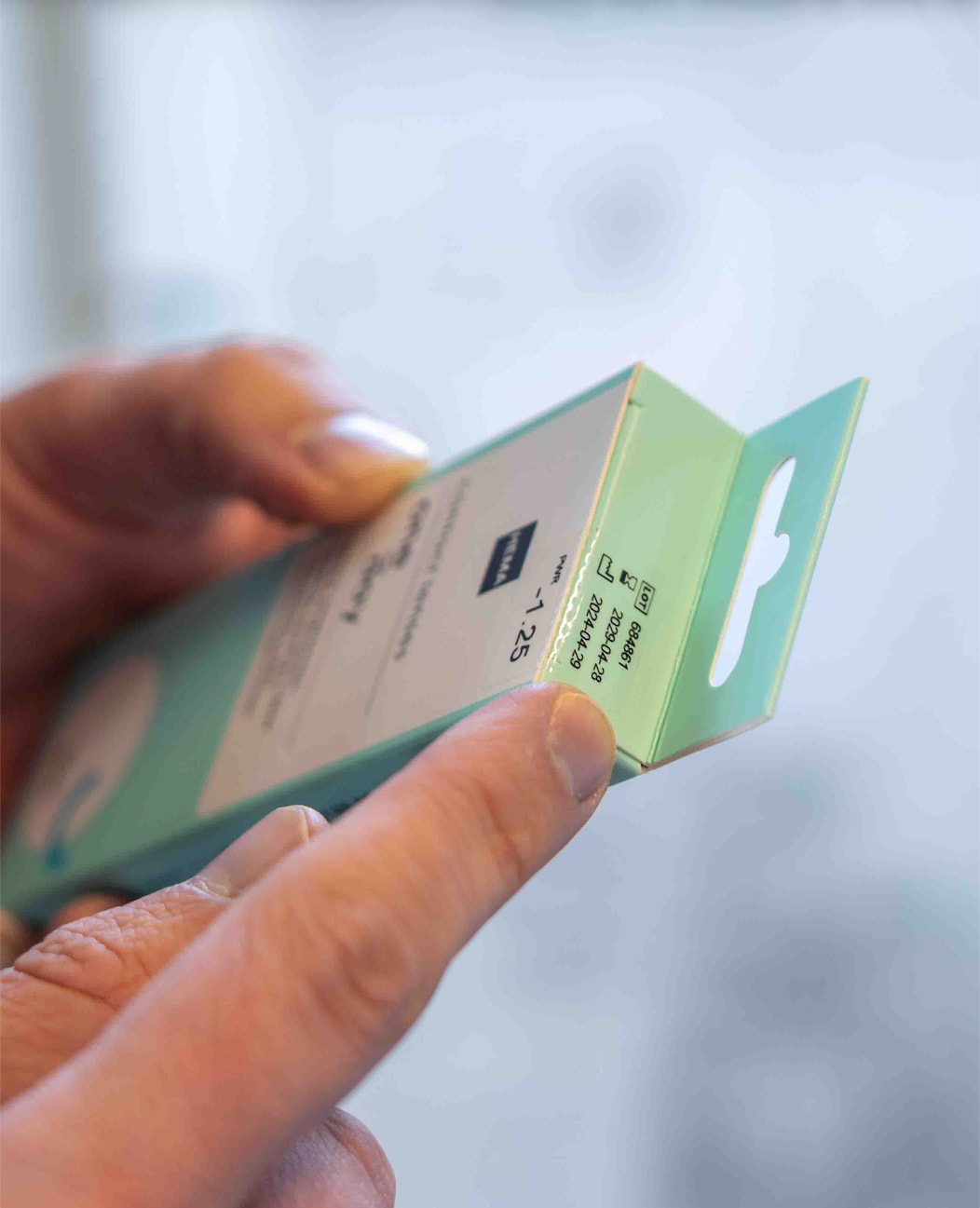
The basis for your declaration is set forth in the technical dossier required by the regulation. In it, you describe the packaging and its intended use, including the materials used in each component. You document how you assessed the requirements and include test reports and a risk analysis.
That data comes from across the entire organization. Purchasing collects material data from suppliers. The assembly process—from bottle to pallet—is often handled by category management or logistics, and quality control manages the test reports. A simple check can verify whether everything adds up. Add up the weights of all components by material type and compare them with the material breakdown you’re reporting. A discrepancy means that your component data and your material claims contradict each other.
The file is constantly evolving. If your supplier replaces the cap with a different type of plastic, you must reassess the packaging and update the DoC. You’ll do the same in 2028 and 2030 when new requirements take effect. With the material composition for each component listed in your packaging data, you can immediately see which declaration is affected by a change.
Frequently Asked Questions About the DoC
Does the DoC have to specify which articles it applies to?
That is not required, because the evidence for each requirement is included in the technical file. However, it is a good idea to include an overview as an attachment. In it, indicate the status for each article, along with the date a requirement takes effect if it does not yet apply. Customers and regulators can then immediately see where you stand, and you can see when a reassessment is needed.
In which language should the DoC be written?
In the language or languages required by the Member State where the packaging is placed on the market. English alone is therefore usually not enough, and anyone who supplies products to multiple countries will need multiple language versions of the same declaration.
My supplier sent me a DoC without supporting documentation. What should I do now?
Request the underlying technical documentation or a summary for each requirement. Article 16 requires suppliers to provide the information you need to demonstrate compliance.

Start with your packaging data
A Declaration of Conformity (DoC) for PPWR is only as accurate as the packaging data it is based on. If you have that data—complete and organized by packaging component—all in one place, you can prepare a DoC whenever necessary. In addition, you’ll know in advance which declarations will need to be renewed in 2028 and 2030.
Innovadis’s sample DoC template will help you get started. It follows the model in Annex VIII and includes a compliance matrix for each article, along with the applicable dates. It also includes a list of components that you can check against the material breakdown.
Would you like to find out where your organization stands first? With the PPWR quick scan, you’ll receive a report within two business days that outlines a realistic first step. Take the PPWR quick scan
This blog explains the PPWR and does not constitute legal advice. Have a lawyer or compliance specialist review the interpretation as it applies to your situation.

Fill out your DoC according to the official template

Free template in Word
Includes a compliance matrix with the effective date for each article

By Tom Heinen
Business Development


Let's create positive
impact together!
Our information
Brouwerijstraat 1-A1
7523 XC Enschede
Certifications


